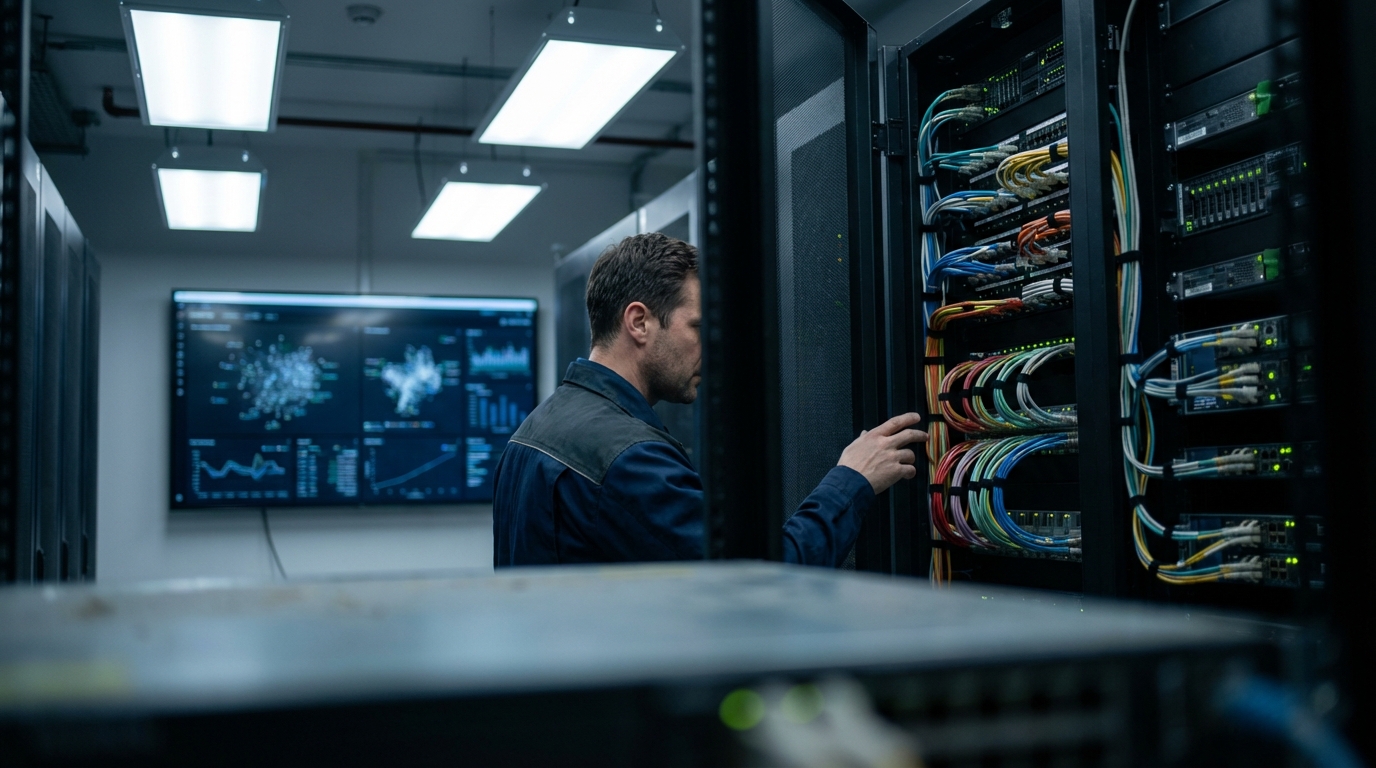

37% of the workforce works remotely at least occasionally. This stable figure conceals a reality: half of these companies have not strengthened their IT security since the transition. Consequently: uncontrolled access, exposed data, and blind trust in the teams’ good judgment.
The Real Risks of Remote Work That Executives Often Overlook
An employee connects from home. The Wi-Fi is open, the router dates back to 2017, and no one checks if the connection is secure. This common scenario exposes your infrastructure to intrusions that you will only detect too late.
SMEs underestimate three major threats. The first relates to unsupervised access: an employee uses a free VPN to bypass a restriction, creating an invisible breach. The second pertains to personal hardware: a computer shared with the family becomes a vector for infection. The third involves home networks: a personal router hack provides direct access to your management system.
Human Error, Primary Vector for Incidents
A single click on a fraudulent attachment is enough to compromise your entire infrastructure. Remotely, without visual control or immediate alert, this type of incident takes hours to be detected. Attackers exploit this latency to exfiltrate sensitive data or lock down your systems.
Executives often believe their employees can recognize a phishing attempt. Reality shows that even trained teams make mistakes under pressure or at the end of the day. A well-crafted email, sent at the right time, bypasses all behavioral barriers.
Neglected Technical Vulnerabilities
A firewall configured for a physical office does not protect remote connections. Security protocols must be adapted for remote work: communication encryption, network segmentation, strong authentication. Without these adjustments, each remote session opens a door.
Companies that have implemented VPN access often believe they have solved the problem. However, a misconfigured or outdated VPN offers false security. Logs are not monitored, updates are deferred, and access rights remain too broad. A breach becomes inevitable.
Security and Freedom Are Not Incompatible: How to Reconcile Them
Imposing constraints that slow down work leads to circumvention. Teams find parallel solutions, often less secure, to gain efficiency. The challenge is to protect without creating visible friction.
Automate Protection Without Hindering User Experience
Modern cybersecurity solutions operate in the background. An EDR antivirus detects and neutralizes threats before they affect the employee. Multi-factor authentication becomes transparent through mobile applications. Communication encryption occurs automatically, without manual intervention.
These systems require no user action. They operate continuously, analyze suspicious behavior, and block intrusion attempts in real time. Productivity remains intact, but the attack surface is drastically reduced.
Teams appreciate this approach when they realize no additional processes are imposed on them. A good security system operates unnoticed while remaining active. This invisibility promotes adoption and reduces circumvention attempts.
Key Principles to Implement Now
Three pillars structure effective protection in a hybrid context. Each addresses a specific vulnerability and is deployed progressively, without requiring a complete infrastructure overhaul.
Precisely Control Access
Each employee should only have the rights necessary for their tasks. A salesperson does not need access to accounting files. A technician should not be able to modify the main server settings. This segmentation limits damage in case of account compromise.
Implementing centralized access management allows for instant revocation of user rights. A departure, a completed assignment, a job change: each event triggers an automatic adjustment. Ghost accesses, left active by oversight, disappear.
Continuously Monitor Network Activity
A SIEM system continuously analyzes flows and detects anomalies. A connection from an unusual country, a massive data transfer in the middle of the night, or a surge in failed connection attempts trigger an alert. The response becomes immediate.
This monitoring is not limited to external threats. It also identifies risky internal behaviors: an employee who downloads the entire client database the day before their departure, or who attempts to access resources outside their scope. Full visibility into activity allows for incident anticipation.
Protect Data Even in Case of Hardware Theft
A laptop disappears during travel. If the disk is not encrypted, all information becomes accessible to whoever recovers it. Systematic media encryption transforms hardware theft into a mere financial loss, without data compromise.
- Automatic Encryption of Hard Drives and SSDs
- Remote Wiping of Lost or Stolen Devices
- Immutable Offline Backups to Ensure Recovery
- Blocking Unauthorized USB Ports to Prevent Exfiltration
These technical measures can be deployed within hours on an existing IT infrastructure. They require no end-user intervention and operate transparently. The return on investment becomes immediate with the first avoided incident.
Measuring the Real Impact: How to Know if Your IT Protection Works
A secure infrastructure is not limited to tool installation. It relies on the ability to measure the real effectiveness of systems and to continuously adjust. Without precise indicators, you are navigating blindly.
Identify Blocked Attempts
A good protection system generates detailed reports on neutralized threats. How many phishing attempts were intercepted this month? How many suspicious connections were denied? This data reveals the intensity of attacks and justifies the security investment.
Executives often discover with astonishment the volume of daily intrusion attempts. An SME experiences an average of several hundred automated scans per week. Without active protection, a fraction of these attempts succeed. Visibility into these statistics transforms risk perception.
Regular monitoring also helps identify the most exposed employees. Certain positions attract more targeted attacks: human resources, accounting, management. Specifically strengthening the protection of these accounts significantly reduces the overall attack surface.
Test Your System’s Resilience
A security audit simulates a real attack to identify vulnerabilities before a malicious actor exploits them. Experts test your remote access, passwords, and network configurations. The resulting report precisely lists critical vulnerabilities and the corrections to apply.
This proactive approach avoids unpleasant surprises. A company that discovers its vulnerabilities during an audit still has time to correct them. A company that discovers them during an intrusion suffers irreversible damage: data loss, business interruption, reputational damage.
Secure Your Remote Work Without Compromise
The risks associated with hybrid work will not disappear. They will evolve with attack techniques and new uses. Your infrastructure must anticipate these changes rather than endure them. Specialized support allows you to build scalable protection, adapted to your business reality. Consult an expert to identify your vulnerabilities and deploy solutions that truly protect.